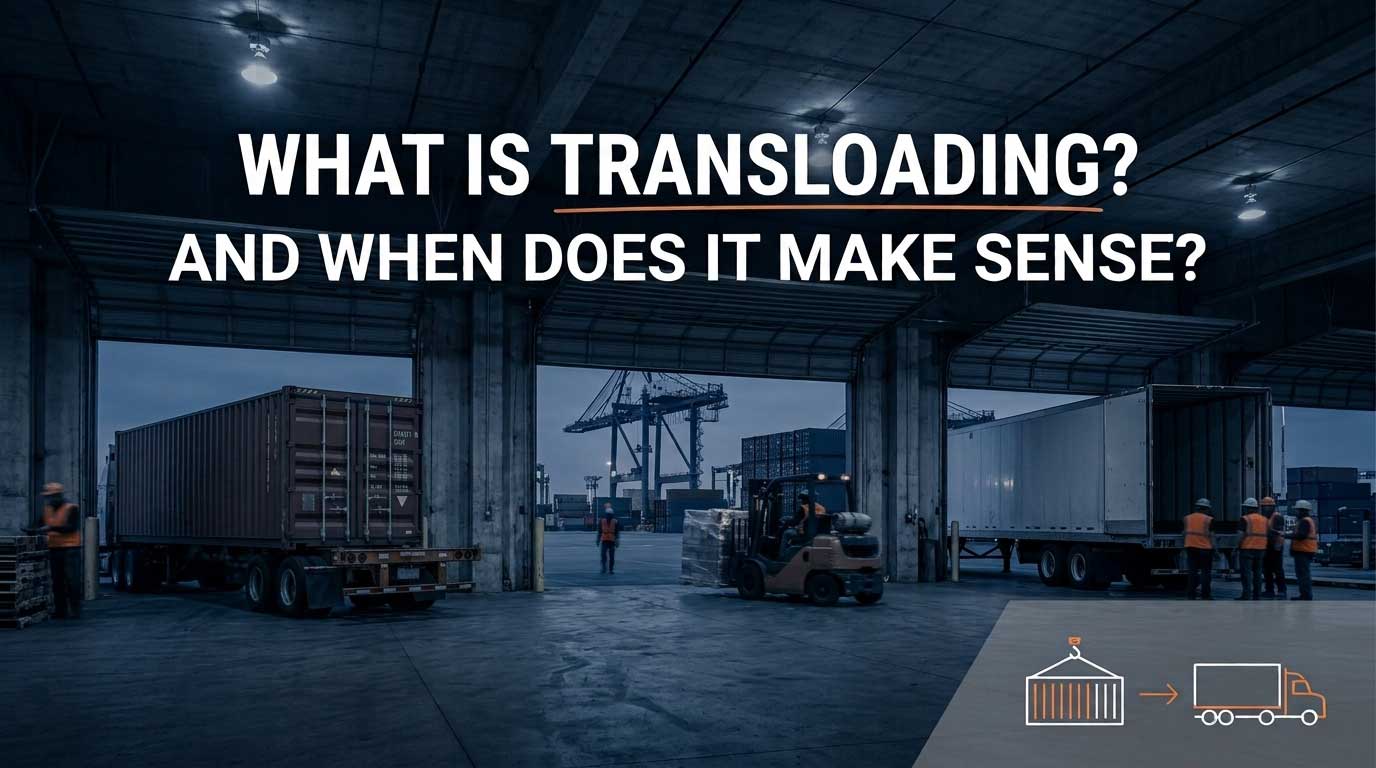
Transloading is one of those logistics terms that gets used often but explained poorly. Most importers encounter it when a freight forwarder or 3PL recommends it as a cost-saving option, but the explanation stops at ‘we move your cargo from one container to another truck.’ That’s technically accurate but it doesn’t answer the question that actually matters: when does transloading reduce your total landed cost, and when does it add unnecessary handling that isn’t worth the extra step?
For importers moving containers through the Port of Savannah, transloading is a particularly relevant decision. Savannah’s position as one of the busiest East Coast container gateways, combined with the availability of port-adjacent transload facilities in Port Wentworth, makes it a natural point to break bulk and redistribute cargo across multiple domestic destinations rather than running full containers all the way inland.
This post explains exactly what transloading is, how it differs from crossdocking and direct delivery, when the math works in your favor, and what to look for in a transload partner near the port.
What Transloading Actually Is
Transloading is the process of transferring cargo from one mode of transportation to another at an intermediate facility, typically at or near a port, rail yard, or distribution hub. In the context of ocean freight imports, it almost always means unloading an international shipping container — a 20-foot or 40-foot ocean container — and reloading that cargo into domestic trucks, typically 53-foot trailers, for final delivery to warehouses, distribution centers, or retail locations.
The reason this transfer matters is that ocean containers and domestic trucking equipment operate under different rules. International containers are governed by ocean carrier agreements and return requirements. Domestic 53-foot trailers are the standard unit of the US trucking network, with broader carrier availability and better freight rates for inland delivery. Moving cargo from one to the other at the port gives you access to competitive domestic freight rates rather than paying the premium that comes with draying an ocean container long distances or waiting for the ocean carrier’s equipment to become available.
It also solves a weight problem that importers often don’t anticipate. Ocean containers can be loaded to 44,000 pounds or more for overseas transit, but domestic highway trucking has a legal weight limit of 80,000 pounds gross vehicle weight — including the truck and trailer. A fully loaded heavy ocean container may exceed what a single domestic truck can legally carry. Transloading allows that cargo to be split across two legal-weight domestic trailers, keeping the shipment compliant and avoiding overweight permit costs.
Transloading vs. Crossdocking vs. Direct Delivery
These three terms are often used interchangeably but they describe meaningfully different operations. Understanding the difference helps you ask the right questions when evaluating your import logistics options.
Direct Delivery
Direct delivery means the ocean container travels from the port directly to its final destination — a warehouse, distribution center, or store — without any intermediate stop. The container is delivered intact, unloaded at the destination, and the empty equipment is returned to the port or chassis pool. It’s the simplest workflow and the right choice when your destination is close to the port, your cargo fits a single delivery point, and your weight and equipment don’t create compliance issues.
Crossdocking
Crossdocking involves moving freight through a facility with minimal or no storage — cargo comes in on one side and goes out on another within hours, sorted and consolidated for final delivery. It’s primarily a sorting and consolidation operation rather than a mode change. A crossdock facility might receive multiple inbound shipments, sort them by destination, and build outbound loads for specific delivery routes, all within the same day.
Transloading
Transloading specifically involves changing the transportation mode or equipment type. Cargo moves out of an ocean container and into a domestic trailer, or from a rail car into a truck. The key distinction from crossdocking is the equipment change — transloading is about converting the freight from international to domestic equipment, while crossdocking is about sorting and consolidating freight for outbound delivery. In practice, a transload facility often performs both functions simultaneously.
| Factor | Direct Delivery | Crossdocking | Transloading |
|---|---|---|---|
| What it is | Container goes from port to final destination intact | Cargo sorted and consolidated with minimal storage | Cargo transferred from ocean container to domestic truck |
| Equipment change | ✗ No | ✗ No | ✓ Yes — ocean to domestic trailer |
| Best for | Single destination, port-adjacent delivery | Sorting multiple inbound shipments for delivery routing | Multi-destination, inland delivery, overweight or split loads |
| Ocean container return | At destination — may incur per diem on long runs | At facility — faster return than inland delivery | At port-adjacent facility — fastest return, minimizes per diem |
| Cost driver | Drayage distance and per diem exposure | Facility handling + outbound freight | Transload labor + domestic freight rates vs. full container drayage |
| Speed | Fastest for a single destination | Fast — same-day processing typical | Slightly slower — adds handling step but opens domestic carrier network |
When Transloading Makes Financial Sense
Transloading isn’t the right choice for every shipment. It adds a handling step, which adds cost and time. The question is whether what you gain on the domestic freight side — lower rates, better carrier options, faster return of ocean equipment — exceeds what you spend on the transload itself. Here’s when the math typically works in your favor.
Your cargo is going to multiple inland destinations
If a single container’s worth of inventory needs to end up at three different distribution centers or retail locations, direct delivery requires either three separate drayage moves or some other form of split shipment. Transloading at a port-adjacent facility lets you break the container into multiple smaller loads at the point of arrival, each headed to a different destination on a domestic carrier. You pay for one transload event instead of three separate drayage runs.
Your container is overweight for domestic highways
As noted above, a fully loaded 40-foot or 45-foot ocean container can exceed domestic highway weight limits. Rather than paying for overweight permits or renegotiating with your supplier about load weights, transloading allows the cargo to be split across two legal-weight 53-foot trailers. The net cost of two trailers is often lower than one overweight permit move, and the flexibility of using standard domestic equipment opens up a much larger carrier network.
You’re shipping high volume on a consistent lane
High-volume importers doing ten or more loads a month can achieve 15 to 25 percent cost reductions through transloading by negotiating better domestic carrier rates on both sides of the transload than they’d achieve with direct through-trailer pricing. The savings compound at volume — the more lanes you’re running, the more the carrier rate negotiation advantage pays off.
Your delivery destination can’t accept ocean containers
Many warehouse receiving docks, retail distribution centers, and manufacturing facilities are not set up to receive ocean containers. Dock height mismatches, chassis clearance issues, or facility policies that only accept domestic 53-foot trailers make direct delivery impossible regardless of cost. Transloading is the only practical solution in these cases.
You want to minimize ocean container detention and per diem
Ocean containers have free time at the terminal and chassis free time on the road. When containers travel long distances inland for delivery, those clocks run. A transload facility minutes from the port terminal receives the container, transfers the cargo to domestic equipment quickly, and returns the ocean container and chassis to the terminal well within free time windows. That directly eliminates detention and per diem charges that would otherwise accumulate on a long inland delivery.
When Direct Delivery Is the Better Choice
Transloading adds a handling step, and that step has a cost. For certain shipments, the simplicity and speed of direct delivery outweigh the savings transloading could offer.
If your destination is close to the port and your cargo goes to a single location, direct delivery is almost always faster and simpler. The drayage cost is low, there’s no additional handling, and you avoid the risk of damage or discrepancy that comes with any additional cargo transfer.
Fragile cargo, temperature-controlled goods, and hazardous materials are generally better suited to direct delivery in a sealed container. Every additional handling event creates incremental risk of damage or compliance issues that can exceed the cost savings from transloading.
Time-sensitive shipments often favor direct delivery as well. Transloading adds hours to the process — typically same-day, but time nonetheless. For just-in-time manufacturing components or time-sensitive retail replenishment, the transit time savings of direct delivery can be worth a $200 to $400 premium over transloading.
Why Port of Savannah Is a Natural Transloading Hub
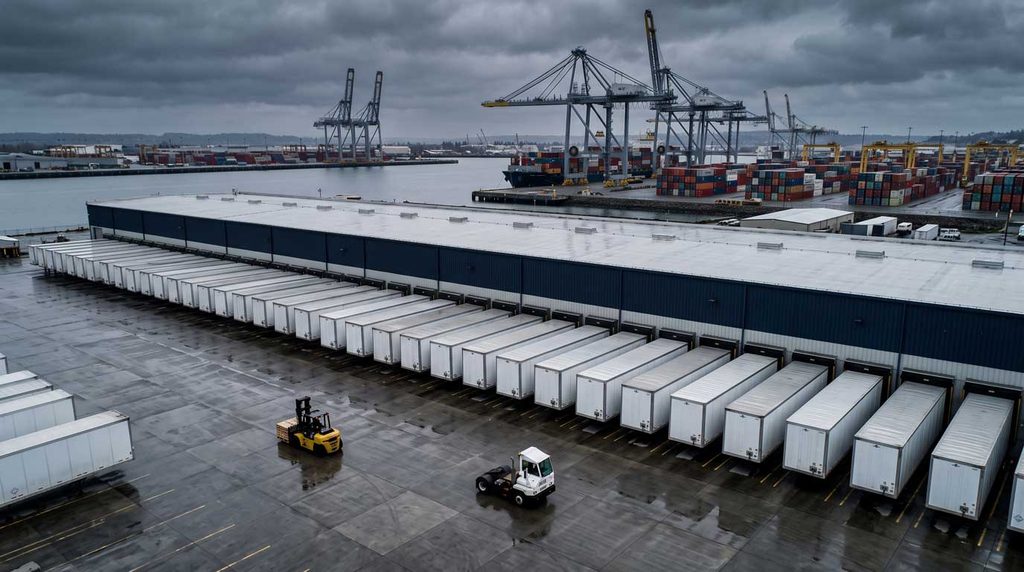
Savannah’s geography and infrastructure make it one of the most practical transloading locations on the East Coast. The port handled nearly 5.7 million TEUs in 2025, making it the second busiest year on record, and the industrial zones in Port Wentworth, Pooler, and Garden City that surround the terminal are home to a dense cluster of logistics facilities — crossdock operations, transload centers, and 3PLs — all within minutes of Garden City Terminal.
That proximity matters for two specific transloading advantages. First, container return timelines are dramatically shorter when your transload facility is five miles from the terminal rather than 200. The ocean container is back at the port within hours rather than days, eliminating per diem exposure entirely for most shipments. Second, the dense carrier network around the Savannah market means competitive domestic freight rates on virtually every major outbound lane — Southeast, Midwest, Northeast, and West Coast.
For importers whose cargo arrives at Savannah and needs to reach multiple points across the Eastern US, the combination of port proximity, carrier availability, and transload infrastructure in the area is difficult to replicate at any other East Coast gateway.
What to Look for in a Transload Partner Near Port of Savannah
- Actual proximity to Garden City Terminal — ask for the specific distance, not just ‘near Savannah.’ Five miles is meaningfully different from fifteen when it comes to container return timelines and detention exposure.
- Integrated drayage capability — a transload facility with its own drayage operation or a direct carrier relationship removes the coordination gap between the port and the facility.
- 53-foot domestic trailer availability and carrier network depth — ask which carriers they regularly work with and what lane coverage looks like for your specific destinations.
- Experience with your cargo type — heavy industrial goods, palletized consumer products, and loose-carton freight all require different handling approaches. Confirm the facility has handled your specific commodity before.
- Weight compliance expertise — if overweight loads are a concern, your transload partner should be experienced at calculating legal split loads and building compliant domestic shipments.
- WMS and visibility — you should have real-time visibility into when your container was received, when cargo was transferred, and when outbound loads departed. Ask specifically about tracking and reporting.
- Crossdock capability alongside transload — if you need both sorting and mode change in the same facility, confirm they can handle it in a single operation rather than two separate handling events.
How Transloading Connects to Your Broader Import Strategy
For most importers, transloading isn’t a one-time decision. It’s a recurring operational choice that should be evaluated each shipping season based on volume, destinations, carrier rates, and container availability. Brands that build a transloading relationship with a port-adjacent partner early tend to use it selectively — running direct delivery when it makes sense and transloading when the destination mix or weight situation makes it the better option.
The most operationally efficient importers treat their transload facility as a distribution switch — a point where they can decide, after the container arrives, how to split and route cargo based on current inventory needs and carrier rates rather than having committed to a single delivery plan weeks earlier when the shipment was booked. That flexibility has real value in an environment where logistics costs are volatile and delivery requirements shift.
US business logistics costs reached $2.3 trillion in 2024, with transportation accounting for roughly 58 percent of the total. In that environment, any structural opportunity to reduce cost per unit on the domestic freight leg — which transloading at a port-adjacent facility consistently provides — compounds meaningfully across a year’s worth of import volume.
Frequently Asked Questions
Transloading specifically involves changing transportation modes — typically unloading freight from an international ocean container into a domestic 53-foot trailer. Crossdocking involves sorting and consolidating freight with minimal storage time, without necessarily changing the equipment type. In practice, a port-adjacent transload facility often performs both functions: transferring cargo from ocean containers into domestic trailers (transloading) and sorting that cargo by destination for outbound delivery (crossdocking), all in a single handling event.
Transloading fees are typically quoted per unit, per pallet, or per hundredweight depending on the facility and cargo type. The cost of the transload itself needs to be weighed against what you save on the domestic freight side — lower carrier rates on 53-foot trailers versus drayage rates on ocean containers, faster container returns that avoid per diem charges, and the elimination of overweight permit costs if your container is heavy. For high-volume shippers, transloading regularly delivers 15 to 25 percent reductions in overall freight cost when the lane economics work in its favor.
Transloading makes the most sense at Port of Savannah when your cargo is going to multiple inland destinations, your container is overweight for domestic highways, your delivery location can’t accept ocean container equipment, or you want to minimize detention and per diem by returning ocean equipment quickly. Savannah’s port-adjacent industrial zone in Port Wentworth offers transload facilities minutes from Garden City Terminal, which accelerates container return and opens up a broad domestic carrier network for inland delivery.
Palletized consumer goods, non-perishable food products, apparel, building materials, and durable industrial goods are all well-suited for transloading. Cargo types that are less suited include temperature-controlled and refrigerated goods, hazardous materials requiring sealed container transport, and fragile items where additional handling creates unacceptable breakage risk. For those categories, direct delivery in a sealed container is typically the better approach.
Ocean containers can legally carry much heavier loads than US domestic highways allow. A loaded 40-foot container can weigh 44,000 pounds or more net cargo weight, but domestic trucks are limited to 80,000 pounds gross vehicle weight including the truck, trailer, and cargo. A transload facility splits the overweight container across two legal-weight 53-foot trailers, each carrying a compliant load. The cost of two domestic trailers is typically less than the cost of overweight permits and the limited carrier availability that comes with oversized loads.
Detention fees accumulate when ocean containers sit at the terminal beyond their free time window before pickup. Per diem fees accumulate when chassis aren’t returned to the pool within the allotted free period. A transload facility minutes from Garden City Terminal can receive a container, transfer the cargo to domestic equipment, and return the ocean container and chassis to the terminal the same day — well within free time windows. A warehouse 200 miles inland typically can’t return equipment that quickly, and those extra days of exposure add up to meaningful cost.
Need Transloading Near the Port of Savannah?
Ship8 operates a port-adjacent transload and crossdock facility in Port Wentworth, GA — minutes from Garden City Terminal. One provider for drayage, transloading, and fulfillment, with direct access to the domestic carrier network.
Talk to Our Team