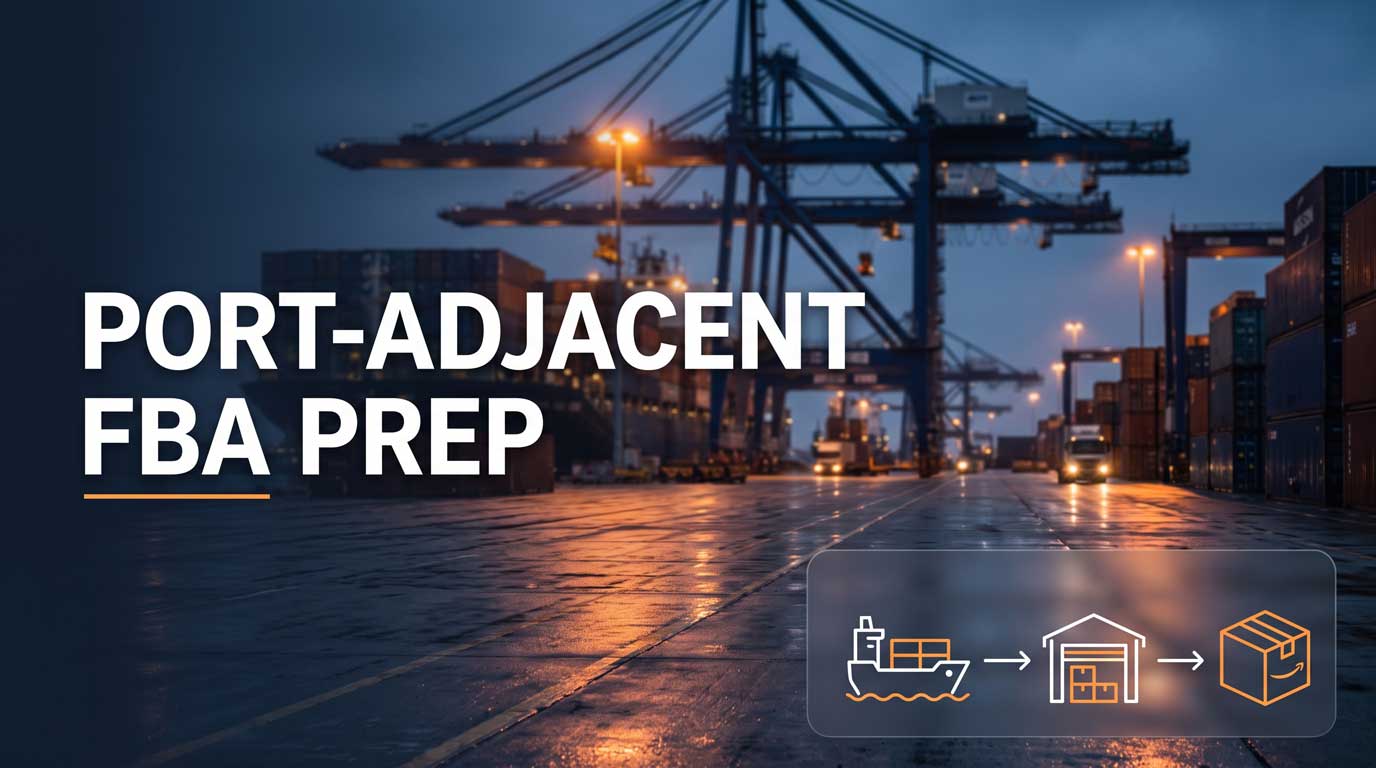
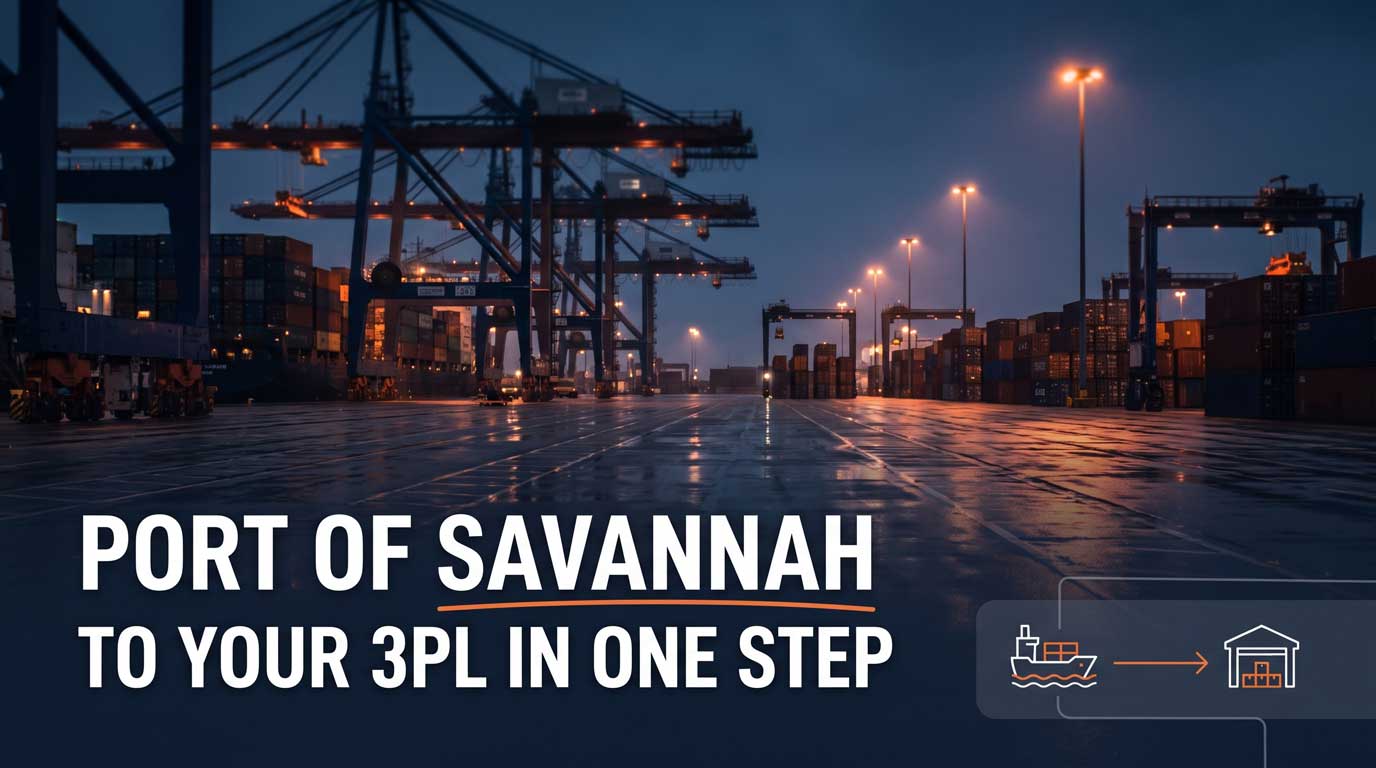
Most importers think of the port and the warehouse as two separate problems. First you get your container released, then you figure out how to get it somewhere useful. But when your 3PL is located minutes from the terminal gates — and that 3PL has its own drayage division — those two collapse into one. That’s the operational advantage of being port-adjacent, and it’s one of the most underused levers in ecommerce and retail supply chains today.
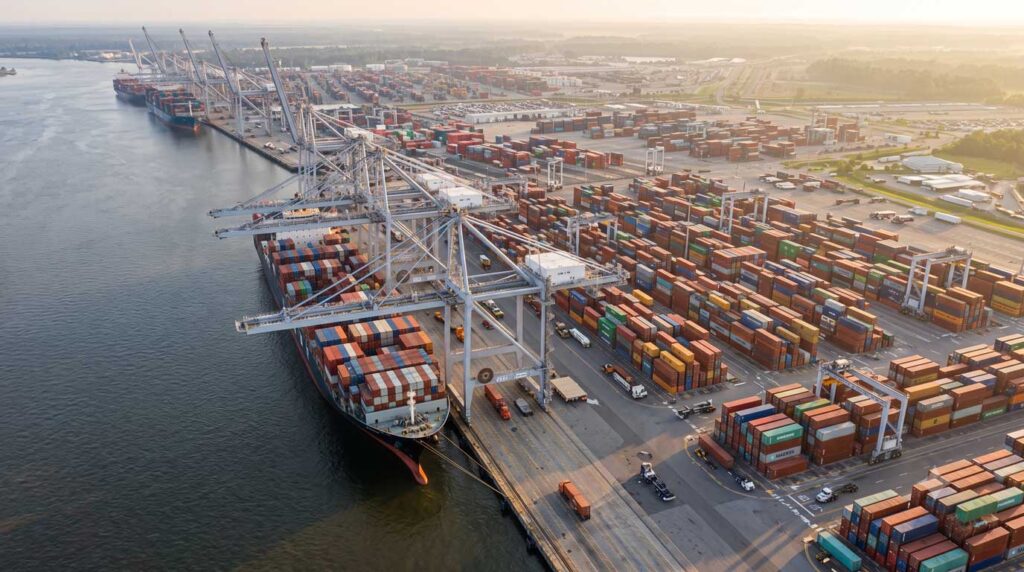
The Port of Savannah handled nearly 5.7 million TEUs in 2025, its second busiest year on record, and is in the middle of a $5 billion expansion that will add five new container berths over the next decade. More containers are moving through Savannah than ever, and more brands are discovering that where their 3PL sits relative to that port matters a lot more than they initially thought.nearly 5.7 million TEUs in 2025, its second busiest year on record
This post walks through exactly how a port-adjacent 3PL move works, what it costs, what can go wrong in a less integrated setup, and why consolidating drayage and warehousing into a single provider changes the math on your landed costs.
What ‘Port-Adjacent’ Actually Means in Practice
Port-adjacent is a term that gets used loosely in logistics marketing. What it actually means for your supply chain is straightforward: how many truck miles are between the terminal gates and the warehouse where your inventory lands?
For importers using a 3PL in, say, Atlanta or Charlotte, a container released from Garden City Terminal in Savannah has to travel 250 to 400 miles before it reaches the warehouse. That’s a day of transit at minimum, often longer depending on appointment availability and driver hours. Detention and per diem clocks are running the entire time.
A port-adjacent 3PL in Port Wentworth, just minutes from Garden City Terminal, changes that equation entirely. A container released in the morning can be unloaded and in process the same day. That’s not a minor efficiency gain — it’s a structural difference in how fast inventory gets available for order fulfillment.
The Standard Container Move: What Happens Without Integration
Here’s how a typical container move looks when drayage and warehousing are handled separately, which is how most importers still operate.
Your container arrives at Garden City Terminal. Your customs broker files the entry and waits for CBP release. Once it’s cleared, you contact a drayage company separately, they schedule a pickup appointment at the port, the driver picks up the container, and delivers it to your warehouse. If your warehouse isn’t the same company as your drayage provider, there’s a handoff with its own scheduling window, receiving appointment, and paperwork. At each step, there’s a potential for delay, an additional fee, and a communication gap between parties who have no operational connection to each other.
Detention and per diem are where this gets expensive. Detention fees apply when a container sits at the terminal beyond its free time before pickup. Per diem fees apply when a container chassis isn’t returned within the allotted window. When your drayage company and your warehouse operate independently, coordinating those timelines is your problem, not theirs.
Common Cost Leaks in a Fragmented Port-to-Warehouse Move
- Detention charges when terminal pickup is delayed due to appointment backlogs or driver availability
- Per diem fees when chassis return is delayed due to warehouse scheduling conflicts
- Chassis split fees when the container and chassis originate from different locations
- Missed free time windows that trigger additional storage fees at the terminal
- Communication delays between your broker, your drayage provider, and your warehouse team
- Redelivery costs if the warehouse can’t receive when the driver arrives
What a Consolidated Port-to-3PL Move Looks Like
When your drayage and your warehousing are handled by the same provider, or by two divisions of the same company, the operational picture changes significantly. There’s one point of contact, one set of scheduling conversations, and one team accountable for the container from the moment it leaves the terminal to the moment the last pallet is put away.
For Ship8, that means OA Express, our drayage division, handles the container pickup from Garden City Terminal and delivers directly to our Port Wentworth facility. The receiving team at the warehouse knows the container is coming, the dock is scheduled, and the receiving workflow starts immediately on delivery. There’s no handoff between companies, no separate appointment to coordinate, and no gap in accountability.
For the importer, this consolidation removes a layer of logistics management. Instead of managing a drayage company, a warehouse, and the coordination between them, you have one conversation. One invoice. One place to call if something needs attention.
Step by Step: How a Container Move Works With a Port-Adjacent 3PL
Step 1: Customs Clearance
Your customs broker files the entry with CBP at the Port of Savannah. Savannah operates a consolidated customs facility, so clearance is centralized. Once your cargo is released, your 3PL can be notified immediately and drayage scheduled. This is where C-TPAT certified operations have an advantage — certified shippers typically see expedited processing and fewer inspections, which means faster release.
Step 2: Drayage Pickup at Garden City Terminal
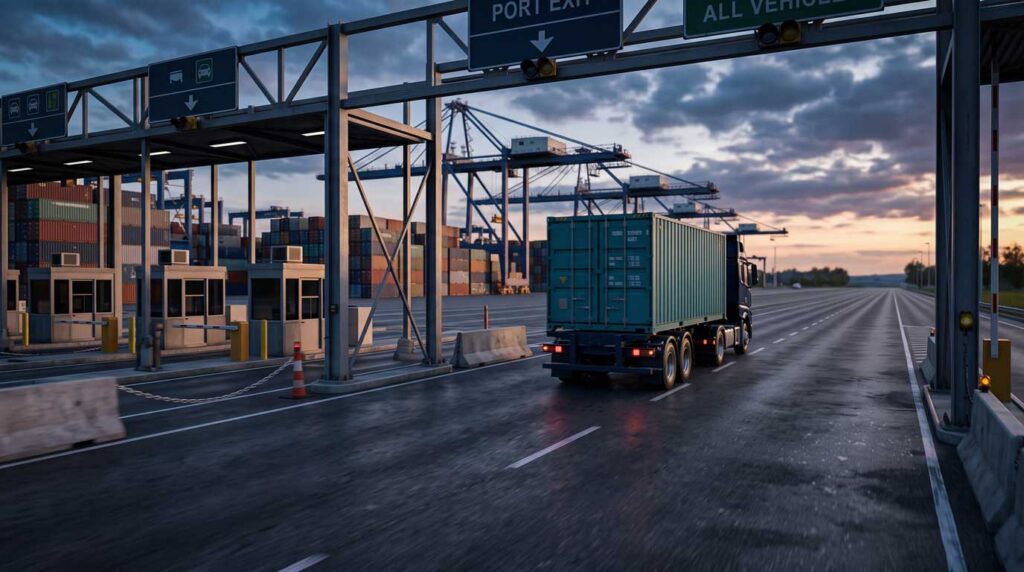
OA Express dispatches a driver to Garden City Terminal with a scheduled pickup appointment. Our proximity means we’re not burning transit time getting to the terminal — the driver is local, familiar with the terminal operations, and operates on private chassis rather than relying on the shared chassis pool where availability can be unpredictable.
Step 3: Direct Delivery to Port Wentworth
The container moves from Garden City Terminal to our Port Wentworth facility, roughly five miles. In most cases, a morning release results in a same-day delivery. Because the warehouse and drayage are the same operation, the receiving dock is ready when the driver arrives — no coordination gap, no waiting.
Step 4: Unloading and Receiving
Our warehouse team unloads the container, counts and inspects inventory against the packing list, and puts product away into your designated storage locations. You receive a receiving report confirming units, SKUs, and any exceptions. At this point, your inventory is live in our WMS and available for order fulfillment.
Step 5: Chassis Return
The empty container and chassis are returned to the terminal or chassis pool according to the free time window, avoiding per diem charges. Because we control this leg of the process, we manage the return timing — it’s not dependent on your warehouse scheduling an outbound move before the driver can leave.
Industries We Serve
Ship8 supports companies across numerous industries, including:
- ✓Consumer Products
- ✓Apparel & Footwear
- ✓Furniture
- ✓Medical Devices
- ✓Automotive Parts
- ✓Industrial Manufacturing
- ✓Food & Beverage
- ✓Ecommerce Brands
- ✓Retail Distribution
- ✓Amazon FBA/FBM Sellers
Why the Port of Savannah Specifically
Savannah’s position isn’t just about size. It’s about connectivity and speed. The port offers 39 weekly container services to global destinations, the most of any port on the South Atlantic or Gulf Coasts. Containers from Asia, Europe, and Latin America arrive on consistent, predictable schedules that importers can plan around.
The port also moved a record 545,214 containers by rail in 2025, with vessel-to-rail speed of 22 hours — down from 28 hours at the start of the year. For importers who need to move inventory to inland distribution points via rail, Savannah’s Mason Mega Rail Terminal connects to destinations including Atlanta, Memphis, Nashville, Charlotte, and Orlando.
The port is also in the middle of its most significant expansion in decades. The Ocean Terminal upgrade is adding capacity to handle two large vessels simultaneously, with the second berth expected in June 2026. A new gate structure at Garden City Terminal will feature 12 inbound and six outbound lanes when completed in November 2026, reducing truck congestion at the terminal entrance.Ocean Terminal upgrade is adding capacity to handle two large vessels simultaneously
For an East Coast importer, that combination of volume, speed, connectivity, and ongoing infrastructure investment makes Savannah the most reliable inbound gateway on the South Atlantic coast.
What to Look for in a Port-Adjacent 3PL
Not every warehouse near the port is actually set up to handle the full port-to-warehouse workflow. A few things actually distinguish a capable port-adjacent 3PL from a warehouse that happens to be nearby.
Integrated drayage or a drayage partnership is the first and most important factor. If your 3PL doesn’t have its own drivers or a direct relationship with a drayage company, you’re still managing two separate providers even if the warehouse is close to the port.
WMS integration matters too. Your inventory should be live in the warehouse management system from the moment it’s received, with visibility you can access in real time. If there’s a manual process between receiving and inventory going live, you’re losing time and introducing error risk.
Experience with port operations and customs is the third filter. A 3PL that understands the rhythm of terminal pickups, free time windows, chassis availability, and the difference between Garden City and Ocean Terminal is a fundamentally different partner than one that treats every container move as a one-off project.
Questions to Ask When Evaluating a Port-Adjacent 3PL
- Do you have your own drayage capability or a direct drayage partner — or will I need to coordinate that separately?
- How far is your facility from Garden City Terminal, and what’s your standard container-to-receiving timeline?
- How do you handle chassis return and free time management?
- Do you have experience with both FCL and LCL shipments from Savannah?
- How is my inventory visible to me once it’s received — what WMS access do I have?
- Can you handle FBA prep, DTC fulfillment, and wholesale distribution from the same inventory pool?
The Bottom Line on Port-to-3PL in One Step
The most expensive part of moving a container from port to warehouse is usually not the drayage itself. It’s the coordination cost, the delay cost, and the detention and per diem charges that accumulate when two separate providers are managing the same move without talking to each other. A port-adjacent 3PL with integrated drayage eliminates that problem at the root.
For importers who are currently managing drayage and warehousing separately, the switch to a consolidated provider is usually simpler than expected and produces immediate, measurable improvement in both cost and lead time. The container still has to make the same physical journey — but when one team is accountable for the entire move, it happens faster, with fewer surprises.
Frequently Asked Questions
Drayage is the short-distance trucking of a container from a port terminal to a nearby warehouse or distribution center. At the Port of Savannah, drayage connects Garden City Terminal or Ocean Terminal with warehouses in the Port Wentworth, Pooler, and Garden City industrial zones. It matters because drayage timing directly affects detention and per diem charges — the fees that accumulate when a container sits at the terminal too long or a chassis isn’t returned on time. A local drayage provider that understands the port’s appointment system and free time windows is one of the most important cost controls in an import operation.
For a port-adjacent 3PL in Port Wentworth, same-day delivery is standard once a container has cleared customs and a pickup appointment is confirmed. Garden City Terminal to Port Wentworth is approximately five miles. For 3PLs located further inland, transit time adds a day or more, and appointment scheduling across separate providers can extend that timeline further.
FCL, or full container load, means your cargo fills the entire container. LCL, or less-than-container load, means your cargo shares a container with other shippers’ goods. FCL containers are picked up intact and delivered directly to the warehouse for unloading. LCL shipments go through a container freight station where they are deconsolidated, sorted, and staged before delivery. Your 3PL should be able to handle receiving for both, though the timelines and workflows are different.
The most common unexpected costs are detention fees (charged when a container stays at the terminal beyond its free time before pickup), per diem fees (charged when the chassis isn’t returned within the allowed window), chassis split fees (when the container and chassis are picked up or returned to different locations), and congestion surcharges during peak periods. Working with a drayage provider that has private chassis and local knowledge of the port’s appointment system is the best way to avoid most of these.
Yes — a 3PL with the right capabilities can receive your container, break it down, perform FBA prep including FNSKU labeling and poly bagging, and simultaneously fulfill DTC and wholesale orders from the same inventory pool. This is the core advantage of a multi-channel 3PL versus a dedicated FBA prep center, which typically only handles one output. If you’re selling on Amazon, your own site, and other channels, consolidating that into one 3PL near the port eliminates duplicate inventory across multiple facilities.
For most East Coast importers, yes. The Port of Savannah offers 39 weekly container services to global destinations, more than any other port on the South Atlantic or Gulf Coasts, and handled nearly 5.7 million TEUs in 2025. Its location in southeastern Georgia gives strong coverage for the Southeast, Mid-Atlantic, and, via rail, the Midwest and Northeast. Importers with heavy concentration in the Northeast may find New York or Baltimore more efficient for that specific region, but for general East Coast and Southeast distribution, Savannah is typically the most cost-effective gateway.
The Port of Savannah continues to grow as one of North America’s premier import gateways. Companies that pair that gateway with an integrated, port-adjacent logistics partner position themselves to reduce landed costs, improve inventory availability, and create a more resilient supply chain.
Choosing the right 3PL isn’t simply about finding warehouse space. It’s about selecting an operational partner that can manage every step from vessel discharge to final delivery.
Your Container Doesn’t Stop at the Port. Neither Should Your Logistics Strategy.
Whether you’re moving containers through Savannah now or planning your East Coast distribution strategy, we handle drayage and fulfillment from one location — minutes from the terminal gates.
Talk to Our Team