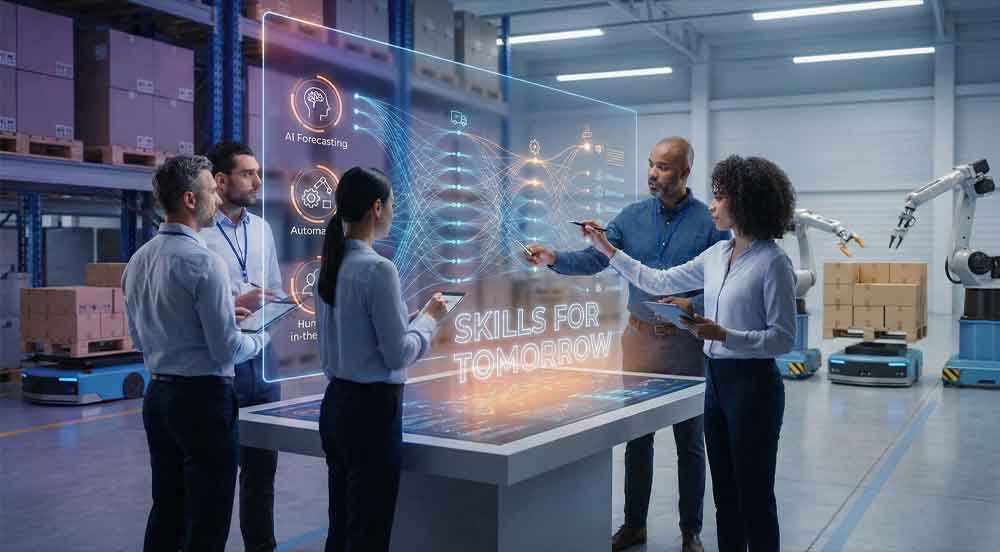
Supply chains aren’t short on technology — they’re short on supply chain skills that enable teams to use it effectively.
AI-driven forecasting, warehouse automation, real-time visibility tools, and orchestration platforms are becoming standard across logistics networks. Yet many organizations are discovering the same hard truth: technology alone doesn’t create resilience, efficiency, or scale. People do.
As supply chains become more automated and data-rich, the most valuable teams won’t be defined by who has the best software — but by who has the right skills to turn technology into execution.
So what does “training for tomorrow” actually mean in a tech-driven supply chain?
1. Data Literacy (Not Data Science)
Tomorrow’s operators don’t need to build models — they need a strong foundation in the importance of data literacy in the workplace to correctly interpret outputs.
What this looks like in practice:
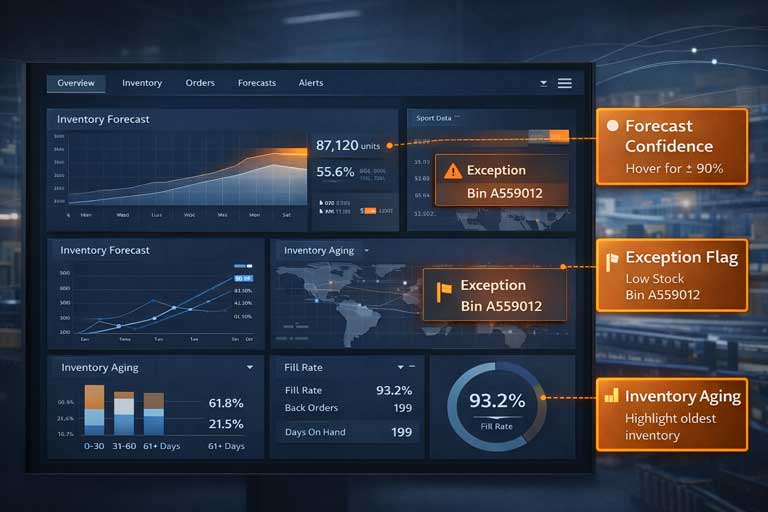
- Reading dashboards without blindly trusting them
- Knowing when forecasts are directionally helpful versus operationally dangerous
- Asking better questions of AI tools instead of waiting passively for answers
Why it matters:
Bad decisions made faster are still bad decisions. Teams must understand what the data is saying — and just as importantly, what it isn’t saying.
2. Human-in-the-Loop Decision Making
Automation is accelerating — but human judgment isn’t going away.
The future belongs to teams that know when to let systems run and when to override them.
Critical supply chain skills:
- Exception management over manual processing
- Root-cause analysis instead of reactive firefighting
- Confidence to challenge system recommendations
Why it matters:
The most expensive failures happen when teams either override everything — or trust systems blindly.
3. Systems Thinking Across the Network
Supply chains are ecosystems, not silos.
Training must move people beyond:
- “My department”
- “My KPI”
- “My shift”
And toward:
- End-to-end flow awareness
- Downstream impact thinking
- Trade-off decision making
Example:
A warehouse labor optimization that improves pick rates but creates carrier cutoff failures isn’t an improvement — it’s a shift in pain.
4. Technology Translation Skills
One of the most underrated modern supply chain skills: translation.
The future workforce needs people who can:
- Translate ops pain into system requirements
- Translate system outputs into operational action
- Bridge IT, ops, finance, and customers
These are the people who make tech investments actually pay off.
Why it matters:
Most supply chain tools don’t fail technically — they fail organizationally.
5. Adaptability Over Role Rigidity
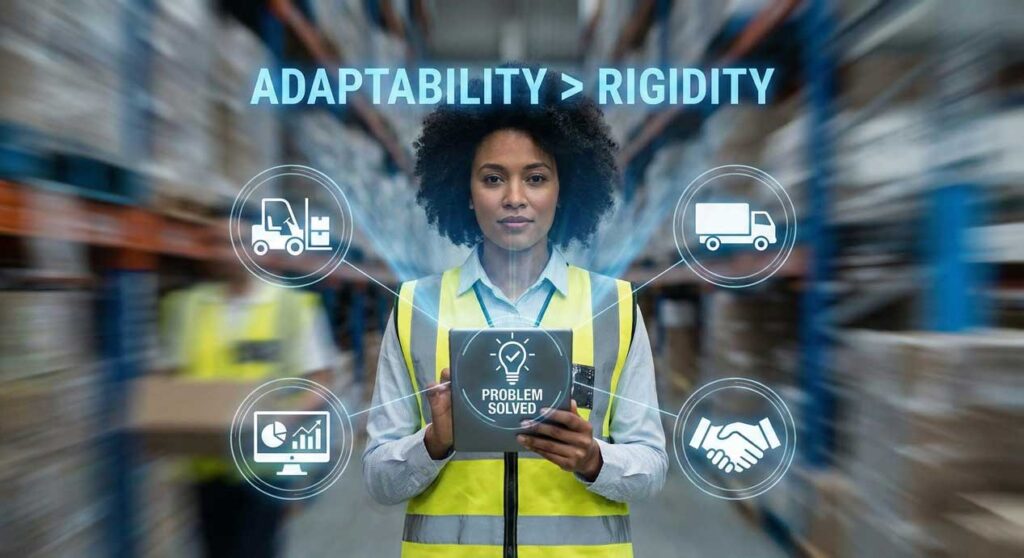
Static job descriptions don’t survive dynamic networks.
Tomorrow’s teams must be trained for:
- Cross-functional exposure
- Continuous process change
- New tools layered on top of existing workflows
The question isn’t “What’s my job?”
It’s “What problem am I solving right now?”
6. Leadership at Every Level
In a tech-driven environment, leadership isn’t limited to titles.
Teams need people who:
- Stay calm when systems fail
- Communicate clearly during exceptions
- Own outcomes, not excuses
Automation raises the floor — leadership raises the ceiling.
Final Thoughts: Technology Scales Operations — Supply Chain Skills Scale Results
The supply chains pulling ahead aren’t the ones chasing every new platform. They’re the ones investing just as intentionally in people, training, and decision frameworks.
Technology will keep evolving. The differentiator will be the teams prepared to evolve with it.
At SHIP8, we’ve seen firsthand that when modern systems are paired with well-trained operators, planners, and leaders, supply chains don’t just become faster — they become smarter, more resilient, and more profitable.