If you’re shipping orders off Amazon through Multi-Channel Fulfillment, you’ve probably noticed your fulfillment bill creeping up faster than it used to. That’s not your imagination, and it’s exactly why the Amazon MCF vs. 3PL fulfillment decision has become more pressing in 2026 than in past years. Amazon raised MCF fees by an average of thirty cents per unit starting January 15, 2026, more than triple the eight-cent increase it applied to standard FBA orders. A second fee, a fuel and logistics surcharge, stacked on top of that in May. The gap between fulfilling on Amazon and fulfilling everywhere else just got a lot wider, and it’s worth understanding why before you decide what to do about it.
For many brands, fulfillment has quietly become one of the largest operating expenses outside of product cost. Choosing between Amazon Multi-Channel Fulfillment (MCF) and an independent 3PL can significantly impact shipping costs, customer experience, and long-term profitability.
At SHIP8, we support brands across Amazon, Shopify, Walmart, TikTok Shop, wholesale distribution, and retail fulfillment. Every day we help companies evaluate whether Amazon MCF, a traditional 3PL, or a hybrid fulfillment strategy best fits their operational goals.
MCF has always been a convenient option. You’re already paying to store inventory in Amazon’s network, so using that same inventory to fulfill your Shopify orders, your TikTok Shop orders, or your wholesale shipments feels efficient. For a lot of sellers it still is. But 2026’s fee changes are pushing more brands to ask whether MCF is still the most cost-effective way to fulfill orders that have nothing to do with Amazon’s own marketplace.
Let’s break down what MCF actually is, what changed this year, where a 3PL fits into the comparison, and how to think about which one makes sense for your business.

What Is Amazon MCF, Exactly?
Multi-Channel Fulfillment lets you use the same inventory you’ve already sent to Amazon’s fulfillment centers to fulfill orders placed anywhere else, your own website, Shopify, eBay, Walmart, TikTok Shop. You ship product into Amazon’s network once, and Amazon picks, packs, and ships it out whenever an order comes in from any channel you’ve connected, not just Amazon’s own marketplace.
The appeal is obvious. One inventory pool, one fulfillment network, and you skip the work of setting up a separate warehouse relationship just to handle your off-Amazon orders. For sellers who are already deep in the FBA ecosystem, it can feel like the path of least resistance.
What Changed with MCF Pricing in 2026
Amazon raised fulfillment fees across FBA, Buy with Prime, and MCF starting January 15, 2026, but the increases were not applied evenly, according to Supply Chain Dive. Standard FBA fees rose by an average of eight cents per unit. MCF fees rose by an average of thirty cents per unit, and single-unit MCF orders specifically saw increases as high as thirty-five to forty-one cents. Amazon is deliberately making it more expensive to use its fulfillment network for anything that isn’t an Amazon marketplace sale.
A second cost layer arrived a few months later. Starting May 2, 2026, Amazon began applying a 3.5% fuel and logistics surcharge to all MCF fulfillment fees in the US, on top of the January increases. For a seller shipping meaningful MCF volume, that’s two separate fee increases compounding within the same year.
To soften the blow, Amazon also launched MCF Preferred Pricing in January 2026, offering eligible sellers up to 15% off MCF outbound fees and as much as a dollar in FBA credit per unit shipped. But the maximum discount tier requires shipping more than nineteen thousand units every twelve weeks, roughly sixteen hundred units a week. That’s a high bar that puts the best pricing out of reach for most growing brands, even ones doing solid volume.
For context on what this means in real dollars: a seller shipping ten thousand MCF units a month could see costs climb by three thousand dollars a month or more just from the fee increases, before factoring in storage costs or any peak season surcharges.
How 3PL Fulfillment Differs From Amazon MCF
A third-party logistics partner operates outside Amazon’s pricing decisions entirely. When you work with a 3PL, your fulfillment costs are set by a contract you negotiate, not by a fee schedule Amazon can change twice in the same calendar year. That’s the biggest structural difference, and it matters more in 2026 than it has in past years.
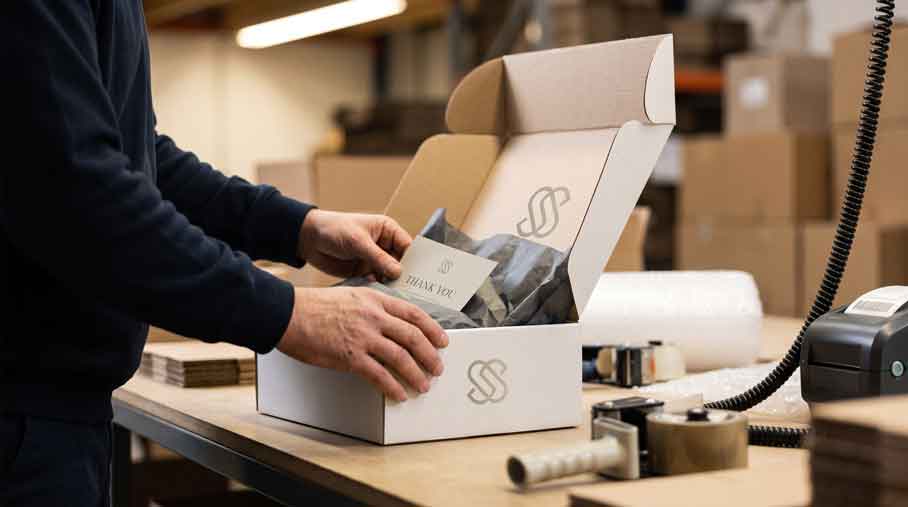
Beyond pricing stability, a 3PL gives you a few things MCF structurally can’t. Custom packaging and branded unboxing, since you’re not bound to Amazon’s standard pack-out. Direct communication with a real operations team rather than a support ticket queue. And the ability to manage inventory across every one of your sales channels from one system you actually control, rather than routing everything through Amazon’s infrastructure.
Amazon MCF vs. 3PL Fulfillment: Side-by-Side Comparison
| Factor | Amazon MCF | 3PL Partner |
|---|---|---|
| Pricing stability | ✗ Subject to Amazon fee changes, sometimes twice a year | ✓ Set by negotiated contract, doesn’t shift with Amazon policy |
| Custom packaging | ✗ Standard Amazon pack-out only | ✓ Fully custom, branded experience |
| Multi-channel inventory | ✗ Single Amazon-controlled pool | ✓ One inventory pool you manage directly |
| Walmart fulfillment | ✗ Cannot use Amazon Logistics as carrier, surcharge waived through 2027 only | ✓ No carrier restrictions |
| Communication | ✗ Portal and support ticket based | ✓ Direct relationship, real-time contact |
| Best for | Sellers already deep in FBA wanting one less system to manage | Brands prioritizing cost control, branding, and flexibility across channels |
When MCF Still Makes Sense
MCF isn’t a bad option across the board, and it’s worth being fair about where it still works well. If you’re already storing significant inventory in FBA for your Amazon sales, and your off-Amazon order volume is relatively low, the convenience of one connected system can outweigh the fee premium. You’re not managing a second warehouse relationship, and the absolute dollar cost stays manageable if the unit volume is low.
It also makes sense if you’re testing a new channel and don’t yet know if it’s going to be a meaningful part of your business. Routing early TikTok Shop or Walmart orders through MCF while you validate demand is a reasonable way to avoid committing to a new fulfillment relationship before you know the channel is worth investing in.
Where Seller Fulfilled Prime (SFP) Fits
Another option worth considering is Seller Fulfilled Prime (SFP). Rather than storing inventory in Amazon’s fulfillment network, SFP allows eligible sellers to fulfill Prime orders directly from their own warehouse or through a qualified third-party logistics (3PL) provider while still displaying the Prime badge on Amazon listings.
For growing brands, SFP can offer the best of both worlds. Sellers maintain greater control over inventory, branding, packaging, and fulfillment operations without giving up Prime eligibility. This approach also allows businesses to consolidate inventory across Amazon, Shopify, Walmart, TikTok Shop, wholesale, and other sales channels instead of splitting stock between multiple fulfillment networks.
However, Seller Fulfilled Prime comes with strict operational requirements. Sellers must consistently meet Amazon’s performance standards for on time shipping, delivery speed, order accuracy, and customer service. In addition, Amazon requires SFP sellers to operate at least six days per week, Monday through Friday plus either Saturday or Sunday, to maintain Prime eligibility. For many businesses, partnering with an experienced 3PL that already operates at this level can make SFP a practical alternative to Amazon MCF.
If maintaining the Prime badge is important while reducing dependence on Amazon’s fulfillment network, Seller Fulfilled Prime is an option worth evaluating as part of your overall fulfillment strategy.
Signs MCF Is Still a Fit
- Your off-Amazon order volume is low relative to your Amazon sales
- You’re testing a new sales channel and don’t want to commit to a new fulfillment setup yet
- Your product doesn’t require custom packaging or a branded unboxing experience
- You don’t sell on Walmart, where the Amazon Logistics carrier restriction adds friction
When a 3PL Starts to Make More Sense
The math shifts once your off-Amazon volume becomes a real part of your business rather than a side channel. At that point, the widening fee gap between FBA and MCF starts compounding into a real cost difference, and a negotiated 3PL rate that doesn’t move every time Amazon adjusts its pricing starts to look a lot more attractive.
It also becomes the better option once branding starts to matter. If you’re building a DTC presence with packaging that reflects your brand, MCF’s standardized pack-out becomes a real limitation, not just a minor inconvenience. The same goes for Walmart sellers dealing with the Amazon Logistics carrier restriction, which adds an operational wrinkle that simply doesn’t exist with an independent 3PL.
Returns Matter More Than Most Brands Realize
Returns are often viewed as a cost of doing business, but they can also be an opportunity to recover inventory value and improve the customer experience. As ecommerce continues to grow, having a well-defined reverse logistics process has become just as important as outbound fulfillment.
While Amazon MCF provides a standardized returns process, many brands require greater flexibility based on their products, quality standards, and customer expectations. An experienced third-party logistics provider can tailor return workflows to match your business requirements rather than relying on a one size fits all approach.
Depending on the product and return reason, returned inventory may require detailed inspection, restocking into available inventory, quarantine for further review, refurbishment or repackaging, disposal of damaged or unsellable goods, or photo documentation to support quality investigations, customer claims, or supplier chargebacks.
A customized returns program also provides greater visibility into why products are being returned, helping businesses identify recurring quality issues, packaging improvements, or fulfillment trends that can reduce future return rates and improve overall customer satisfaction.
For brands growing direct to consumer, retail, or wholesale operations, an efficient reverse logistics strategy can protect margins, improve inventory accuracy, and turn returns from an operational challenge into a competitive advantage.
Signs It’s Time to Look at a 3PL
- Your off-Amazon channels (Shopify, TikTok Shop, Walmart, wholesale) represent a growing share of your revenue
- You’ve felt the impact of the 2026 MCF fee increases on your margins
- Custom packaging or branded unboxing matters to your customer experience
- You sell on Walmart and want to avoid the Amazon Logistics carrier restriction
- You want fulfillment costs that are stable and negotiated, not subject to Amazon’s pricing changes
- You’re managing multiple channels and want one fulfillment partner who handles all of them, not just the ones routed through Amazon
Can You Use Both?
Yes, and a lot of brands do, at least during a transition period. It’s common to keep using MCF for orders placed close to Amazon’s own ecosystem while shifting higher-volume or brand-sensitive channels to a 3PL. The key is being intentional about which channels go where, rather than defaulting everything to MCF simply because the inventory happens to already be sitting in Amazon’s network.
Many brands use Amazon FBA strictly for Amazon orders while utilizing a 3PL for Shopify, Walmart, TikTok Shop, retail distribution, subscription orders, and wholesale. This reduces dependence on Amazon while preserving Prime eligibility.
Some brands also use this moment to consolidate. Moving inventory to a 3PL that handles Amazon FBA prep, DTC fulfillment, and wholesale from one facility means you’re not maintaining separate inventory pools across multiple systems, which becomes its own operational cost as you scale.
Questions to Ask Before You Decide
How much of your revenue actually comes from channels outside Amazon, and is that share growing? If it’s a small slice of the business, MCF’s convenience may still outweigh the fee premium. If it’s growing, the math is shifting against MCF every quarter Amazon adjusts pricing.
Have you actually calculated what the 2026 fee increases cost you specifically? A lot of sellers feel the pinch without knowing the exact number. Pull your MCF fulfillment fee reports from before and after January 15 and look at the real delta on your own SKUs.
Does your brand experience depend on packaging? If unboxing and presentation matter to your customer relationship, that’s a structural limitation MCF can’t solve regardless of pricing.
Do you sell on Walmart? If so, the Amazon Logistics carrier restriction is worth factoring in as an operational cost, not just a footnote.
What to Look for in a 3PL Alternative to MCF
Not every 3PL is set up to take over multi-channel fulfillment cleanly. A few things actually matter when you’re evaluating a move away from MCF.
Look for a partner who already integrates with the channels you sell on, Shopify, TikTok Shop, Walmart, your own site, so order routing happens automatically rather than through manual work on your end.
Ask about pricing structure directly. A good 3PL will give you a clear, stable rate rather than a fee schedule that can shift twice a year the way Amazon’s has in 2026.
And if Amazon FBA is still part of your business, look for a 3PL who can handle FBA prep alongside your other channels, so you’re not running two separate fulfillment relationships side by side.
What Sets an Experienced 3PL Apart
Not all third party logistics providers offer the same capabilities. As your business grows, fulfillment becomes more than simply picking, packing, and shipping orders. The right partner should be able to scale alongside your business while providing the technology, operational expertise, and visibility needed to support long-term growth.
When evaluating a 3PL, consider whether they can provide:
• Multi channel fulfillment across Amazon, Shopify, Walmart, TikTok Shop, and wholesale distribution
• Real time inventory visibility with customer portal access and reporting
• Amazon FBA preparation, replenishment services, and Seller Fulfilled Prime support
• East Coast and West Coast fulfillment locations to reduce transit times and shipping costs
• Custom packaging, kitting, labeling, subscription assembly, and other value-added services
• Returns management, quality inspections, quarantine processing, refurbishment, and disposition services
• Scalable warehouse capacity that supports both seasonal peaks and long-term growth
• Direct access to an experienced operations team instead of relying solely on support tickets
At SHIP8, these capabilities are built into our operating model. We support fast-growing brands with strategically located fulfillment centers, technology integrations across today’s leading ecommerce platforms, real-time inventory visibility, and flexible fulfillment solutions designed to grow alongside your business. Whether you’re shipping direct to consumer orders, replenishing Amazon FBA inventory, supporting wholesale distribution, or evaluating Seller Fulfilled Prime, our team works as an extension of your business to deliver consistent execution and transparent communication.
Closing Thoughts
Amazon’s 2026 fee changes didn’t break MCF, but they did make the decision to stay on it or move it a lot more consequentially than it used to be. The sellers who come out ahead this year are the ones treating fulfillment as a strategic decision they’re actively managing, not a default setting they inherited from being an Amazon seller in the first place.
Wondering whether Amazon MCF or a 3PL is more cost-effective for your business? SHIP8 offers complimentary fulfillment assessments that compare your current shipping profile against customized 3PL solutions. Contact our team to evaluate your fulfillment strategy before your next rate increase.
Ready to Simplify Your FBA Prep?
Whether you’re tightening your in-house process or ready to hand off prep and fulfillment to a partner who knows Amazon’s rules cold, we’re here to help you figure out what’s next.
Talk to Our Team