If you’ve shipped inventory to Amazon recently and it got flagged, delayed, or rejected, you’re not alone, and it’s not because you did anything different than before. As of January 1, 2026, Amazon stopped prepping and labeling inventory in-house entirely. What used to be a fallback option, paying Amazon a small fee to fix labeling or packaging issues at the fulfillment center, is gone. Every unit now has to arrive fully compliant before it ever reaches the warehouse floor.
This is a bigger shift than it might sound like at first. For years, sellers had a safety net. If your packaging wasn’t quite right or your labels were slightly off, Amazon would fix it for a fee and keep your inventory moving. That fee was annoying, but it was a fallback. That fallback no longer exists.
Now every shipment needs to be 100% compliant before it leaves your hands, whether that’s your own warehouse, your supplier’s facility, or a prep center. Get it wrong, and you’re not paying a small correction fee anymore. You’re paying inbound defect fees, eating return freight costs, and watching your inventory sit stranded while you fix the problem and resend it.
This is the moment a lot of sellers are deciding whether to keep prepping in-house or hand it off to someone who does this full time. Let’s walk through what actually changed, what it costs either way, and how to think about the decision for where your business is right now.
What Actually Changed in 2026
Two changes are driving most of the confusion and cost increases sellers are dealing with right now.
The first is the end of Amazon’s in-house prep services. Before January 1, 2026, you could ship slightly non-compliant inventory to Amazon and pay an unplanned prep fee, usually somewhere between fifty cents and two dollars per unit, and Amazon would fix the issue and move your inventory along. That option is completely gone. Amazon now either charges you a defect fee or rejects the shipment outright, and rejected inventory comes back to you at your own expense.
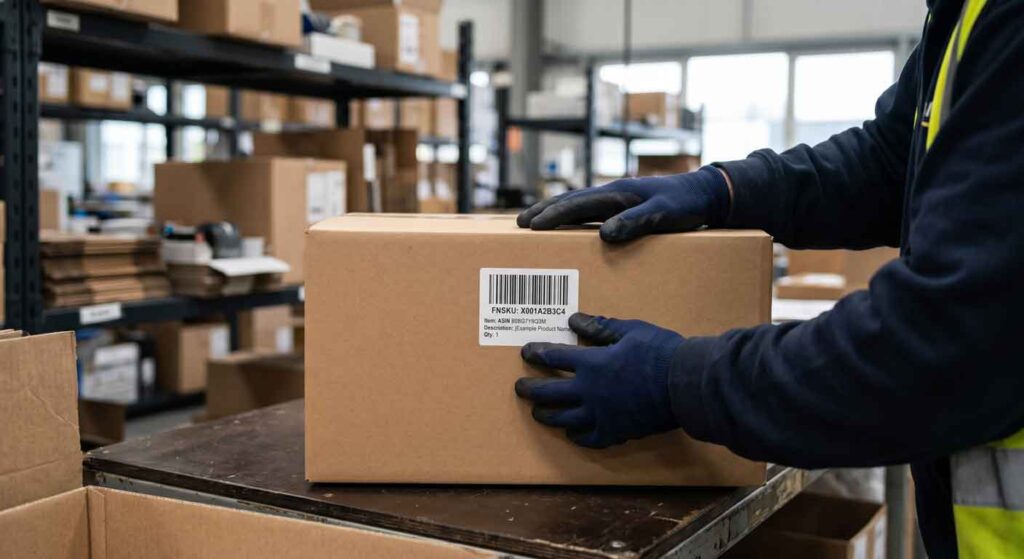
The second change is newer and just as disruptive. As of March 31, 2026, sellers who aren’t enrolled in Brand Registry are required to apply Amazon’s own FNSKU barcode to every single unit. Manufacturer barcodes like UPC or EAN are no longer accepted on their own for non-enrolled sellers. If you’re reselling other brands or haven’t registered yours, this is a mandatory extra labeling step that didn’t exist a year ago.
What Happens If Your Inventory Isn’t Compliant
This is where the real cost shows up, and it’s higher than most sellers expect.
Non-compliant shipments now face inbound defect fees that can run anywhere from around thirty cents to over five dollars per unit for standard items, and considerably more for oversized products. If Amazon rejects the shipment outright instead of just charging a fee, you’re responsible for return freight, and you’ll need to fix the problem and reship the entire batch. That process commonly adds two to six weeks to your timeline, on top of the actual freight and labor cost of doing it twice.
For a grower seller running tight margins, a single rejected shipment can wipe out the profit on that entire batch. And it’s not a one-time risk. Enforcement varies by fulfillment center, product category, and account history, which means a shipment that sailed through last month could get flagged this month with no warning.
Common Reasons Inventory Gets Rejected
- Missing or unreadable FNSKU labels, often due to smudging, wrinkling, or placement on a seam
- Manufacturer barcode still visible alongside the FNSKU, which confuses scanners
- Missing suffocation warnings on poly bags, especially common with apparel and soft goods
- Inconsistent packaging across shipments for the same SKU
- Expiration dates that are hidden, hard to read, or inconsistently formatted
- Bundles that aren’t physically secured or clearly labeled as a single sellable unit
Prepping In-House: What It Actually Takes
Doing your own prep isn’t impossible, and for low-volume sellers it can still make sense. But it’s worth being honest about what it actually requires now that Amazon’s safety net is gone.
You need a dedicated, repeatable process: a high-quality thermal or laser printer capable of producing scannable barcodes, compliant packaging supplies including the right thickness poly bags, and someone trained to catch the small mistakes that cause rejections, mislabeled cartons, missing suffocation warnings, barcodes placed on seams. You also need to actively track Amazon’s requirements, because they update fairly often and enforcement can tighten without much warning.
For a seller doing under a hundred units a month, this is manageable. It’s a controlled, predictable workload, and the cost of your own time is low relative to what you’d pay a prep center. The math changes as volume grows.
What Outsourcing to a Prep Center Actually Costs
Most professional FBA prep centers charge somewhere between fifty cents and three dollars per unit, depending on the complexity of the prep involved, bundling, poly bagging, fragile handling, and so on. That’s a real cost, and it’s fair to ask whether it’s worth it compared to doing it yourself.
Here’s the comparison that actually matters: a single rejected shipment can cost you hundreds to thousands of dollars in return freight, lost sales during the delay, and the labor to redo the prep correctly. A professional prep center’s entire operation is built around staying current with Amazon’s standards, which is exactly the part most in-house sellers struggle to keep up with once requirements shift.
The break-even point isn’t really about per-unit cost. It’s about whether your time, your error rate, and your risk of a stranded shipment are worth more than what a prep center charges to remove all three from your plate.
When Outsourcing Starts to Make Financial Sense
- You’re shipping more than a few hundred units a month across multiple SKUs
- You’ve had a shipment rejected or hit with defect fees in the past six months
- You’re spending more time on packaging and labeling than on sourcing or sales
- You’re not enrolled in Brand Registry and now need FNSKU labels on every unit
- Your product mix includes categories with extra requirements, like batteries, liquids, or fragile items
- You’re scaling toward multiple fulfillment centers and need consistent prep across larger shipment volumes
It’s Not Just FBA Prep Anymore — It’s Your Whole Fulfillment Strategy
Here’s the bigger point that’s easy to miss in the middle of dealing with FNSKU labels and defect fees: if you’re already outsourcing FBA prep, you’re one step away from outsourcing fulfillment more broadly, and for a lot of growing brands, that’s worth considering at the same time.
A 3PL that handles FBA prep as part of a broader fulfillment relationship can do more than just get your inventory compliant. They can manage your DTC orders, your wholesale shipments, and your FBA prep from the same facility, which means one inventory pool instead of three disconnected systems. If you’re already paying someone to prep your Amazon inventory, it’s worth asking whether that same partner could simplify the rest of your fulfillment operation too.
This is especially relevant if you’re selling across multiple channels. Amazon, your own Shopify store, maybe TikTok Shop. Each one has different requirements, and managing prep and fulfillment separately for each channel gets complicated fast as you scale.
Questions to Ask Before You Decide
Before you commit to building out an in-house prep process or signing with a prep center, a few honest questions are worth sitting with.
How many units are you actually shipping to FBA each month, and is that number growing? If you’re well under a hundred units and stable, in-house prep is still reasonable. If that number’s been climbing, the time cost is climbing with it even if you haven’t noticed yet.
Have you had a rejection or defect fee in the past six months? If the answer is yes, that’s not a one-time bad luck event anymore under the new rules. It’s a signal that your current process has a gap that will likely repeat.
Are you enrolled in Brand Registry? If not, the new FNSKU mandate adds a labeling step to every single unit you ship, which meaningfully increases the labor cost of prepping in-house.
Do you sell on more than one channel? If FBA is one of several places you sell, it’s worth thinking about prep and fulfillment together rather than solving Amazon compliance in isolation from the rest of your operation.
What to Look for in an FBA Prep Partner
Not every prep center or 3PL is equipped to handle Amazon’s current requirements well. A few things actually matter when you’re evaluating partners.
Experience with the current rules is the baseline. Amazon’s requirements have shifted twice in 2026 alone, so you want a partner who’s already adjusted their process for the in-house prep shutdown and the FNSKU mandate, not one who’s still figuring it out.
Location and shipping speed matter more than people think. A prep center close to the port or your supply chain’s entry point reduces the number of touchpoints your inventory goes through before it’s compliant and on its way to Amazon.
Transparency on pricing is worth checking closely. Per-unit prep fees can look simple on paper but get complicated fast with add-ons for bundling, fragile handling, or expedited turnaround. Ask for a clear breakdown before committing.
And if you’re thinking beyond FBA, ask whether the partner can support your other channels too. A prep center that only does Amazon work is a narrower relationship than a 3PL that can grow with your full fulfillment strategy as you add channels.
Closing Thoughts
The end of Amazon’s in-house prep service wasn’t a small policy tweak. It shifted real cost, time, and risk onto sellers, and the sellers handling it well are the ones treating prep as a defined process rather than something to figure out shipment by shipment. Whether that means tightening your in-house workflow or handing it off to a partner who does this full time, the sellers who get ahead of it now will spend a lot less time dealing with rejections later.
Ready to Simplify Your FBA Prep?
Whether you’re tightening your in-house process or ready to hand off prep and fulfillment to a partner who knows Amazon’s rules cold, we’re here to help you figure out what’s next.
Talk to Our Team